HR Payroll and Finance teams were stuck in a cycle of delayed month-end closes but no one could pinpoint why
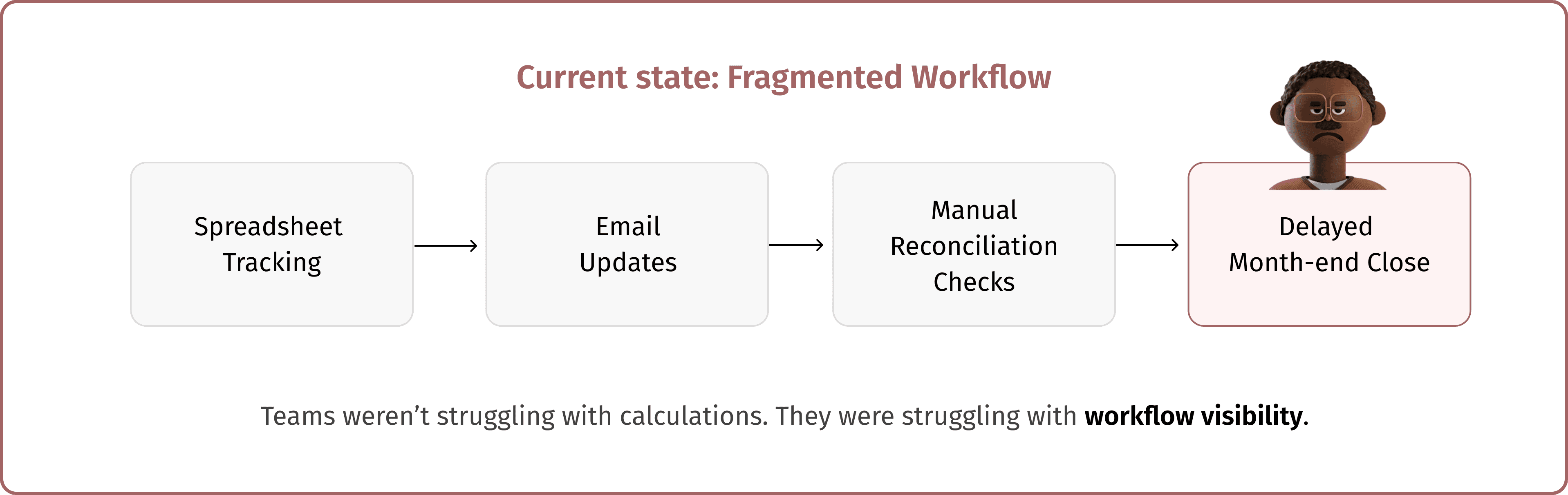
Closing the books at the end of each month is one of the most critical processes for finance teams. However, the workflow was fragmented and current processes were undocumented.
Current State
Multiple teams rely on each other as well as manual tracking across disconnected tools, making the process slow and error-prone.
Breaking the problem down into 3 subparts:
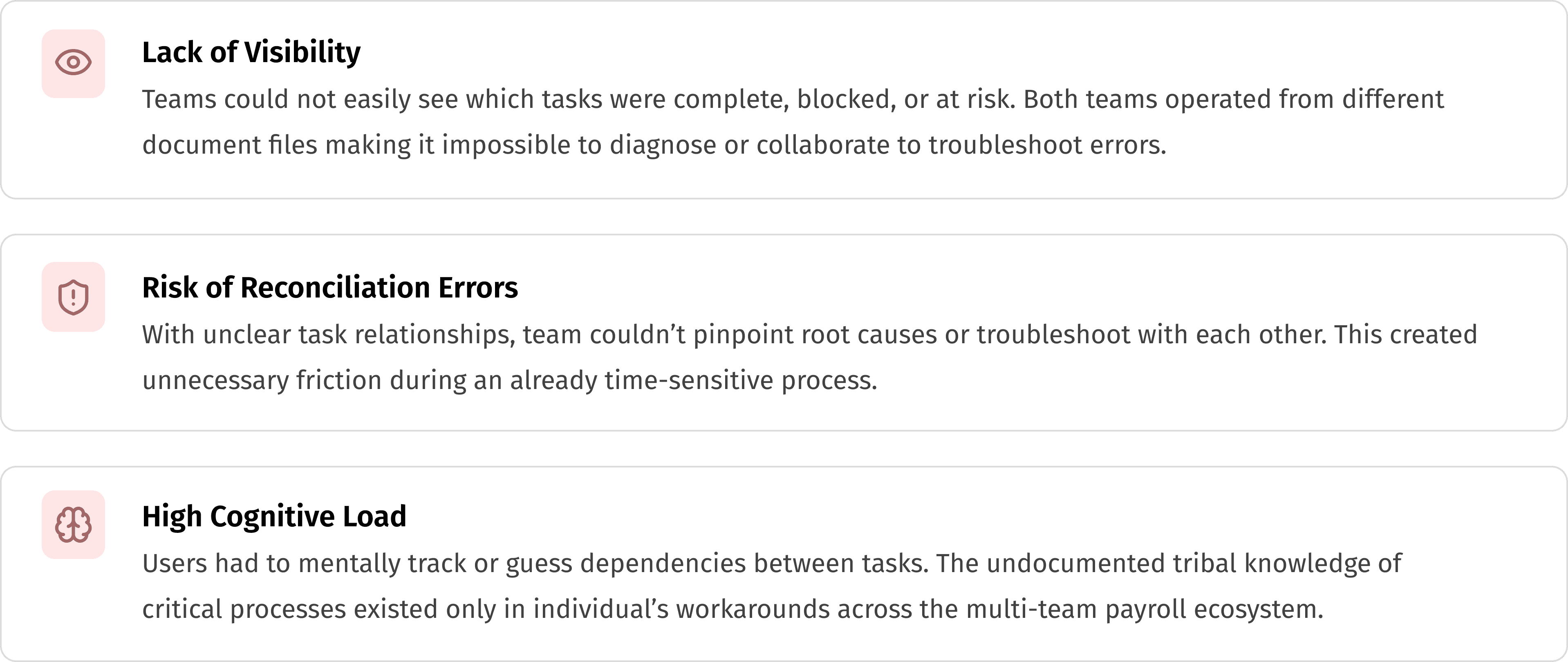
When cross-functional teams can't see shared progress, leadership can't trust the process and the organization can't improve it.
For finance organizations, a delayed close erodes leadership trust, complicates audit readiness, and slows downstream decision-making.
Future State
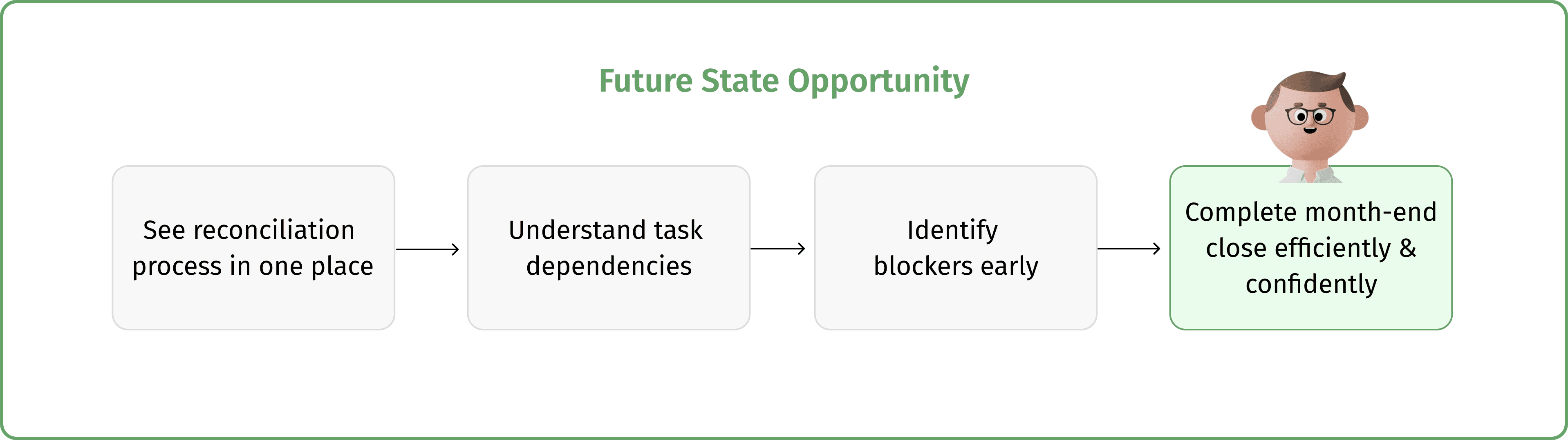
Instead of asking “what task should I do next?”,
users should be able to answer “what’s blocking progress right now?”
The Guiding Questions
The design opportunity became:
How might we transform reconciliation from a fragmented checklist into a structured workflow?
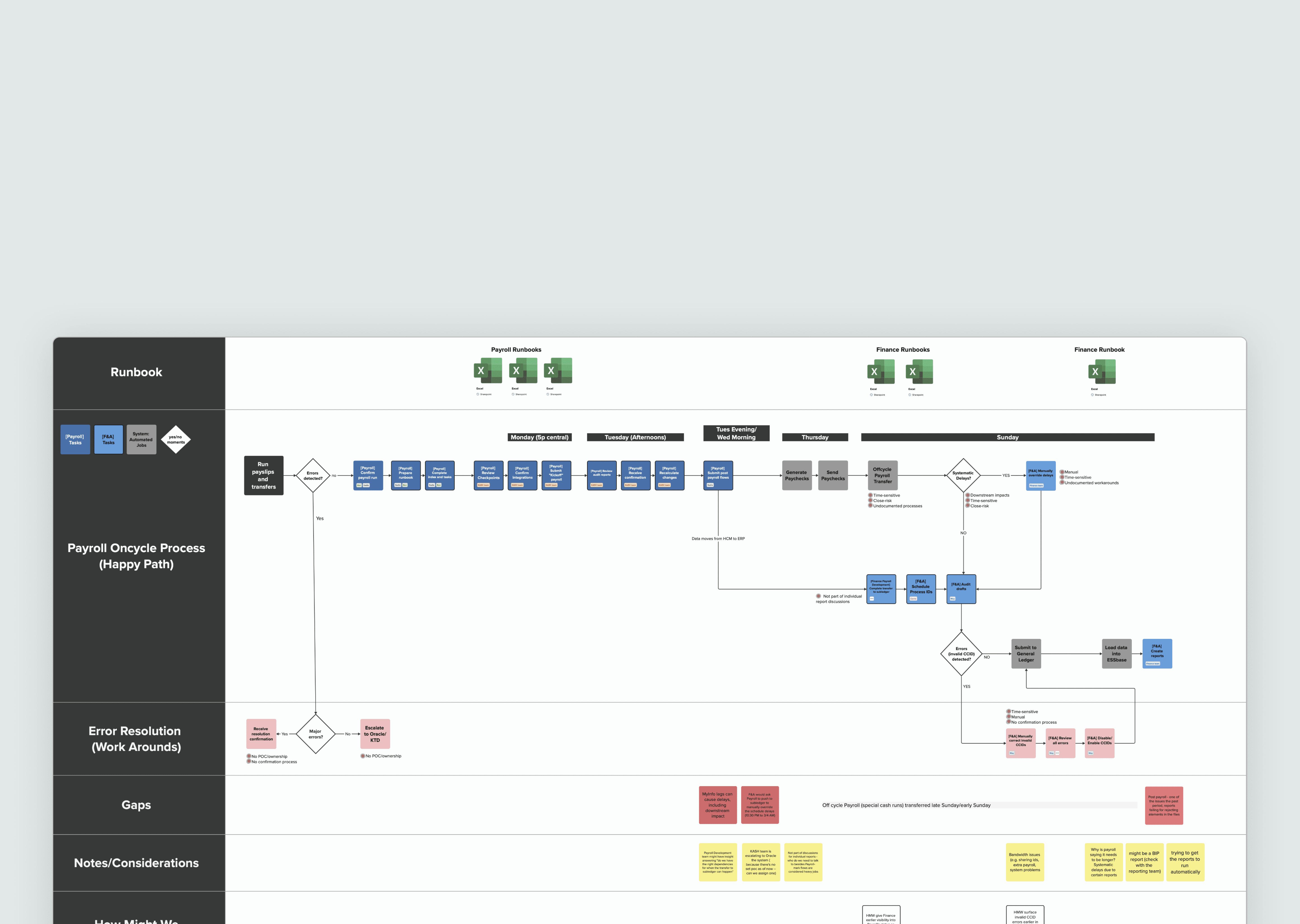
The whole OnCycle Payroll process had no shared model of itself
At a large enterprise, payroll data moves through multiple teams and systems before closing the company's finance books. Each team runs its own "runbook" (a checklist file). When leadership asked me to compare the runbooks to reduce data delays, I expected a simple mapping update. I found instead a system with multiple "runbooks" and not one person could describe the whole process end to end.
My Role
Without a dedicated designer, I took ownership of discovery, systems and service design, and workshop facilitation. I partnered with the finance director, 3 senior PMs, and third-party data team.
A layered systems map
This information architecture strategy compares structural insight how work was intended to flow (the happy path) vs. adaptation to systemic errors (workarounds). To improve clarity and reduce cross-team friction, I focused on three principles:

Merging perspectives, the stacking layers organizes reconciliation task dependencies, status visibility, and blocker identification inviting leadership without multiple separate conversations.
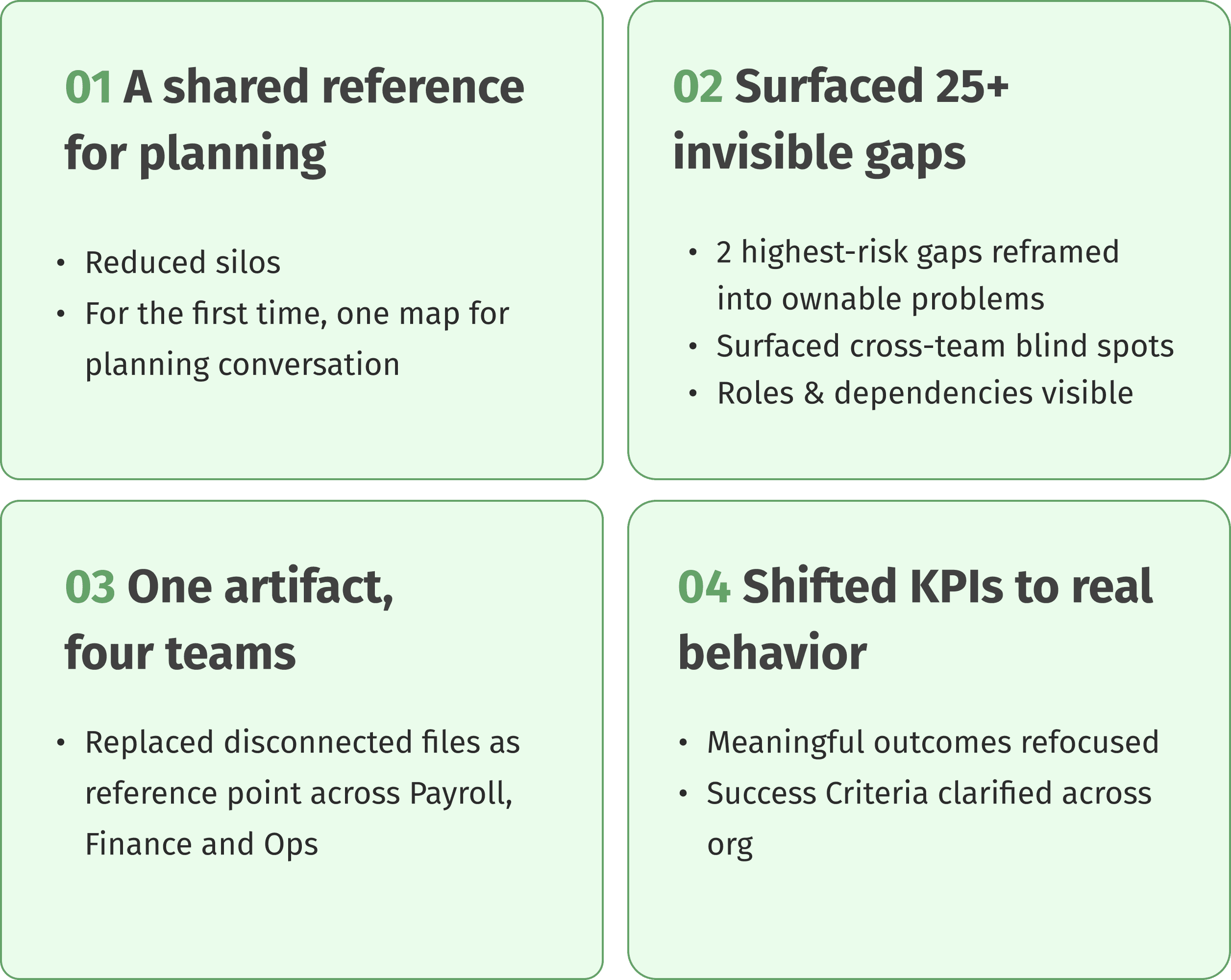
Instead of spreadsheets, teams now work within a shared system reflecting real impactful progress
Our Delayed Analytics
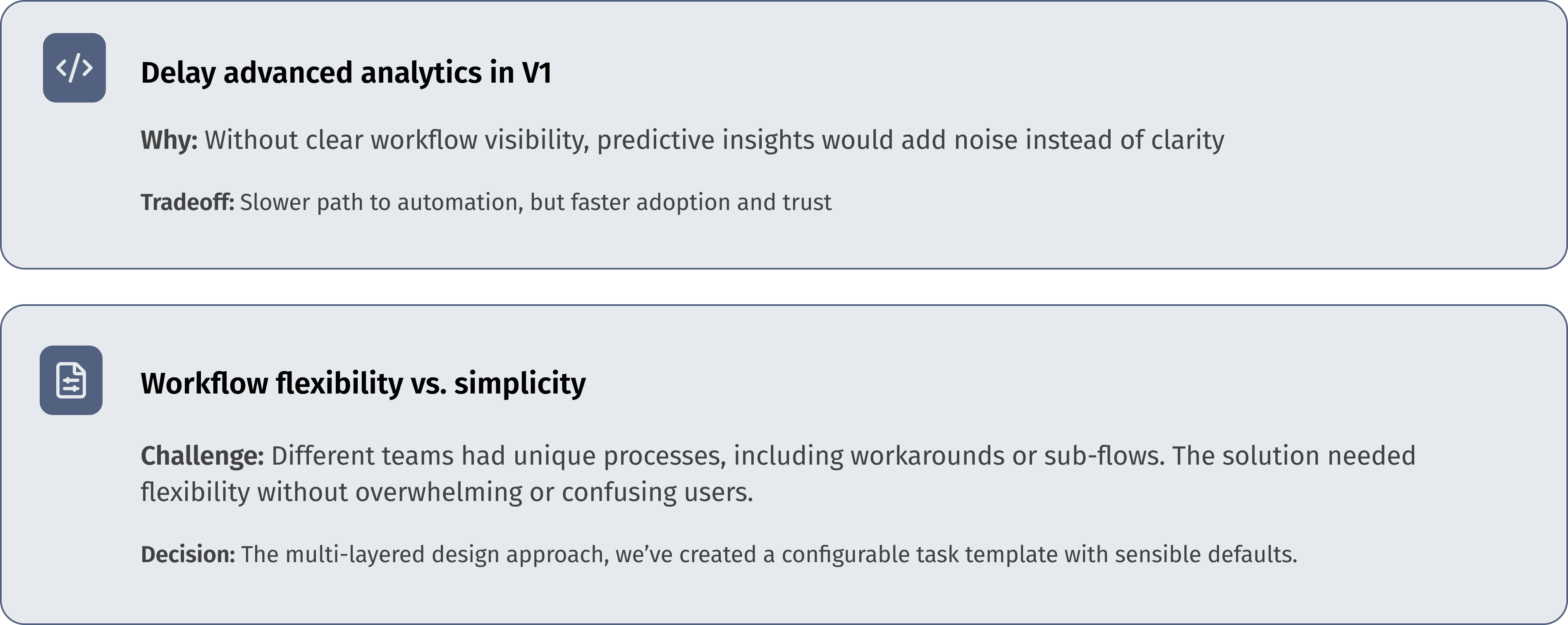
Balancing ideal solution with real-world constraints
Foundation for a new initiative
Due to a company reorg, my efforts ended after handing off deliverables but were adopted by a new Finance initiative to translate foundational artifacts into interaction patterns answering:
How Might We surface data errors earlier in the cycle?
How Might We give Finance and downstream teams earlier visibility into Payroll's status?
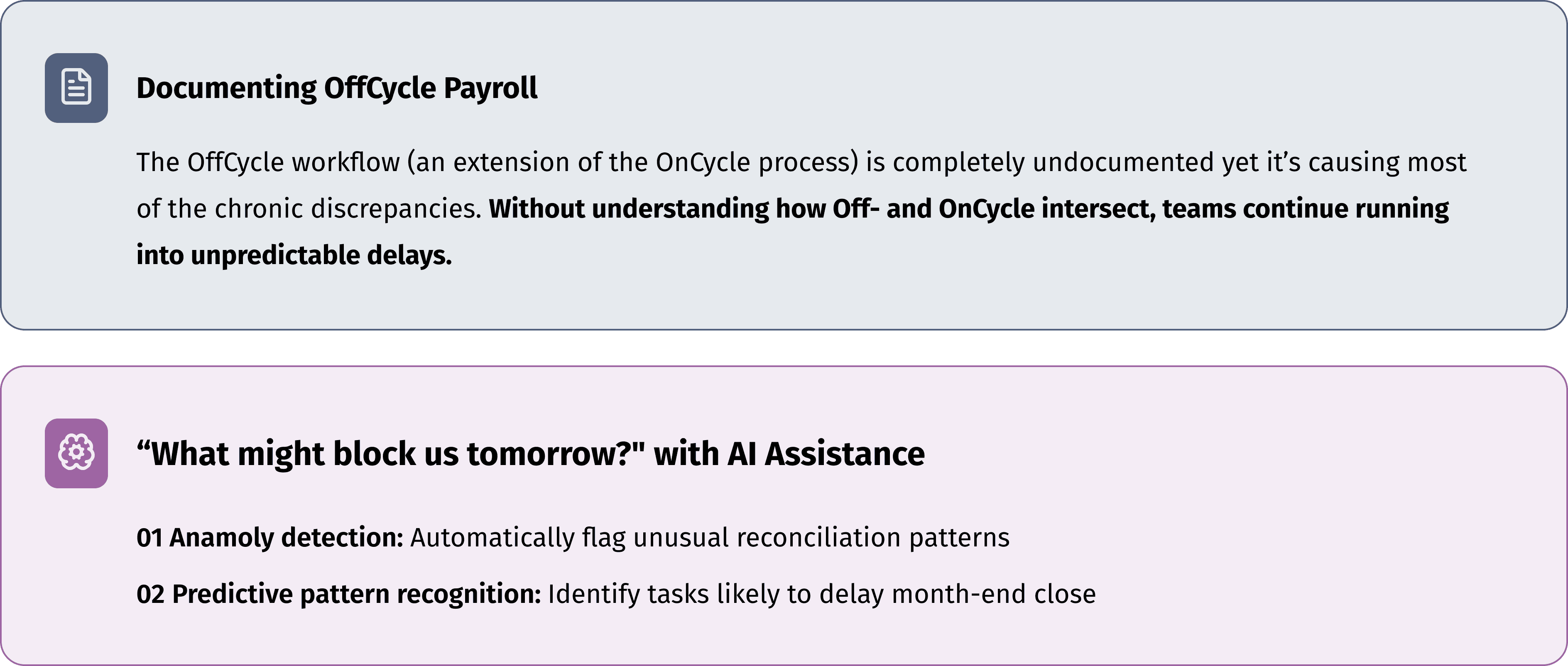
If I had another month
With the foundation established, these are additional strategic opportunities to deepen the solution’s value:
01 Systems thinking is not a separate skill from interface design.
The value came from helping teams see their work differently. Sometimes design’s biggest impact is the foundation, making complex systems understandable rather than resorting to adding more.
02 Every undocumented workaround is an error state nobody designed.
Users don’t always struggle with individual work. Friction points come from not understanding how their work connects to others’. Designing for system and task visibility reduces time-to-resolution more effectively than simplifying individual tasks.
03 Managing evolving scope requires transparency.
Uncovering new complexities with each conversation, Leadership wanting a comprehensive solution but with limited time, I learned to be more transparent on what's critical for immediate execution vs. what needs further investigation.
